
An ESA for anxiety can genuinely ease symptoms for some people, though it is not a guaranteed fix and won’t replace therapy or medication. The right next step is a real evaluation by a licensed mental health professional, who can determine whether an emotional support animal fits your treatment plan and, if so, issue a proper ESA letter. Housing protections exist for ESA owners, but they come with real limits worth understanding before you count on them.
TL;DR:
- An ESA can help reduce anxiety symptoms by providing comfort, routine, and companionship, though evidence is limited and solely supportive.
- Qualifying for an ESA depends on functional impairment caused by your condition, not just diagnosis, requiring a licensed mental health professional’s evaluation.
- Housing protections allow ESA owners to avoid pet deposits, but ESAs do not grant public access rights or travel accommodations like service animals.
- Most effective ESAs are calm, manageable dogs or cats, but other domesticated animals can qualify if they fit your living situation and care capacity.
- Beware of scam sites offering instant ESA letters or fake registration, and always seek evaluation from a licensed clinician to ensure legitimacy.
Table of Contents
- What is an ESA for anxiety, and how is it different from a service animal?
- How does an ESA actually reduce anxiety?
- Who qualifies for an ESA, and what should the paperwork include?
- What does an ESA letter get you under housing law, and where does it stop?
- Which animals actually suit anxiety support, and what does caring for one cost you?
- How do you spot an ESA scam before it costs you money and credibility?
- A balanced note on ESAs and anxiety
- Get ESA guidance you can actually trust
- Where to go for more on ESAs and anxiety
- Sources
What is an ESA for anxiety, and how is it different from a service animal?
An emotional support animal is a pet whose presence provides measurable comfort to someone managing a mental health condition. Unlike a service dog, an ESA does not need specialized task training. Its job isn’t to perform a specific action, like alerting to a panic attack or guiding someone through a crowd. Its value comes simply from being there.
That distinction matters more than most people realize:
- Service animals are protected under the ADA and trained to perform specific tasks tied to a disability, and they have broad public-access rights.
- ESAs provide comfort through presence alone and do not carry the same public-access rights, though UMassMed’s guidance notes that nearly any domesticated animal can qualify as long as it’s manageable in a home setting.
- Therapy animals work in clinical or institutional settings under a handler, visiting hospitals or schools rather than living with one person full time.
Dogs and cats make up the overwhelming majority of ESAs, mostly because they’re easiest to house, transport, and document. But the deciding factor isn’t species. It’s whether the animal is calm, trained enough for daily life, and genuinely manageable in your living situation.
How does an ESA actually reduce anxiety?
The mechanisms are more concrete than “pets make you happy.” Petting an animal engages tactile contact that can shift attention away from racing thoughts. Caring for a dog forces a routine, which is its own quiet form of behavioral activation. Loneliness drops when something in the house depends on you and greets you at the door. None of that is mystical. It’s structure and connection, delivered by a creature that doesn’t ask you to explain yourself.

The strongest data point we have on this is small but real: a 2022 pilot study tracking adults with serious mental illness found their average Beck Anxiety Inventory score dropped from 23.55 to 17.73 after ESA placement, a statistically significant change (p=.049). That’s a meaningful drop in a widely used anxiety measure. It’s also a study of just 11 people, and its authors are upfront that the sample size and design limit how far the finding can travel.
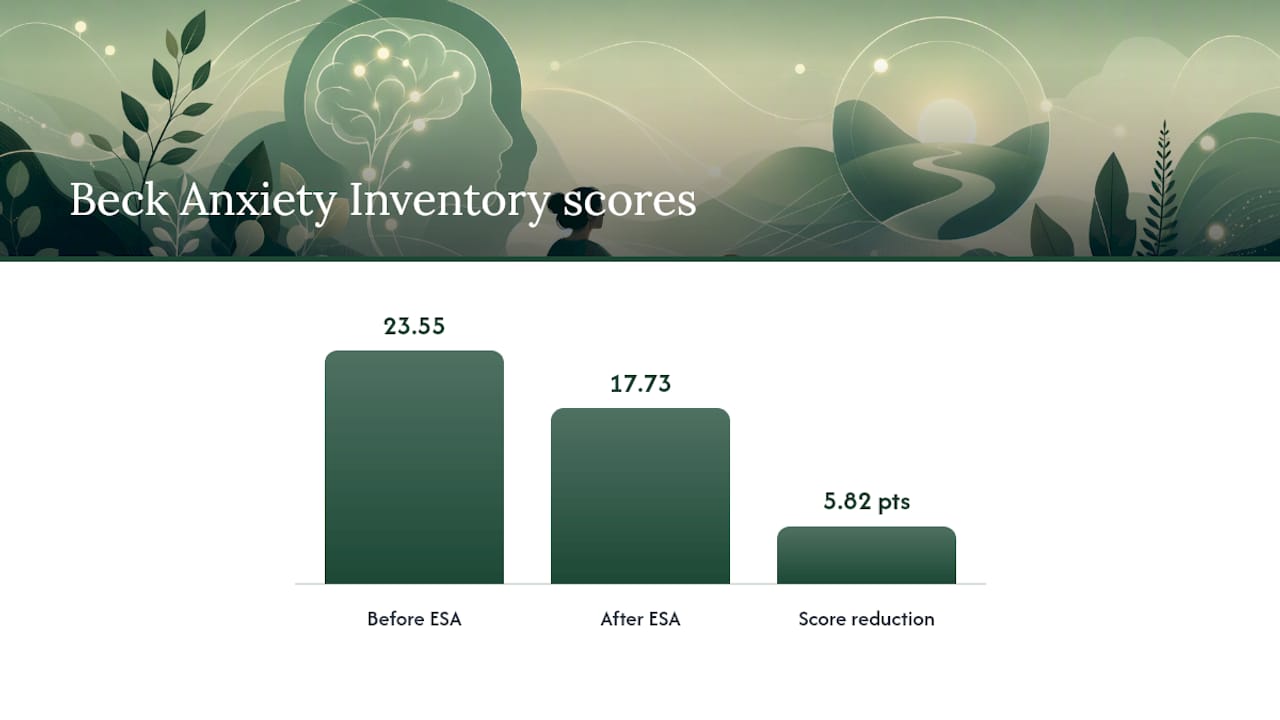
That caveat matters more than the number itself. ESA research is still young, and most studies rely on self-reported symptoms rather than biomarkers or long-term follow-up. What we can say with more confidence comes from the broader human-animal interaction literature: Mental Health America points to consistent findings that animal interaction lowers stress and improves mood across a range of populations, even if the anxiety-specific evidence is still catching up.
A few mechanisms show up again and again in that research:
- Tactile contact and grounding during acute anxiety spikes
- Reduced loneliness through consistent companionship
- Routine and behavioral activation, like walking a dog daily
- Distraction that interrupts anxious rumination
Who qualifies for an ESA, and what should the paperwork include?
Qualifying isn’t about having a diagnosis on paper. It’s about whether your condition causes functional impairment that an ESA could reasonably help offset. Anxiety disorders, PTSD, and depression are the most common qualifying conditions, particularly when symptoms interfere with daily functioning, sleep, or social contact.
Getting there usually follows a short sequence:
- Book an evaluation with a licensed mental health professional. A therapist, psychologist, or psychiatrist is preferred over a general primary-care provider, according to Fair Housing guidance, because they’re better positioned to assess functional impairment tied to a mental health condition.
- Discuss whether an ESA fits your treatment plan. This isn’t a rubber stamp. A responsible clinician will talk through your living situation, symptoms, and whether an animal is likely to help or add stress.
- Get a signed letter, not a certificate. A legitimate ESA letter includes the clinician’s license information, a statement about your diagnosis or functional limitation, and a clear statement that the animal provides therapeutic benefit. There’s no national “ESA registry,” despite what some websites imply.
That letter is what you’ll eventually hand to a landlord or a campus disability office, not a certificate, vest, or ID card.
What does an ESA letter get you under housing law, and where does it stop?
The Fair Housing Act requires housing providers to make reasonable accommodations for assistance animals, including ESAs, even in buildings with a strict no-pet policy. Landlords generally can’t charge a pet deposit or pet rent for a documented ESA, and they can’t deny housing based on breed or species restrictions that would otherwise apply to pets.
That protection has real edges, though:
- An ESA is not a service animal under the ADA, so it doesn’t get automatic access to restaurants, retail stores, or other public spaces.
- Airlines are no longer required to treat ESAs like service animals for cabin travel, a shift from older policy that many owners still don’t realize.
- Landlords can still request documentation and, in some cases, verify that the letter came from a legitimate, licensed source.
- A landlord can deny an accommodation if the specific animal poses a direct threat or would cause substantial property damage that can’t be reasonably mitigated.
When you present your letter, keep it simple: give the housing provider the signed letter, keep vaccination and behavior records on hand, and expect a request for verification if the letter looks generic or comes from an unfamiliar source. Campus disability offices tend to follow a similar process, just internal to the school rather than tied to a landlord.
Which animals actually suit anxiety support, and what does caring for one cost you?
Dogs and cats dominate ESA households for a reason: they’re familiar, manageable in most housing types, and don’t require exotic-pet expertise. Other domesticated animals, including rabbits, birds, and some small mammals, can qualify if they’re genuinely manageable, but the bar is the same regardless of species: can you realistically care for this animal given your space, schedule, and finances?
Before committing, weigh a few practical questions:
- Does your living space and lease actually allow the animal type you’re considering?
- Can you handle the grooming, exercise, and veterinary costs long term, not just in the first excited month?
- Will daily care tasks genuinely calm you, or will they become one more source of stress on hard days?
- Do you have backup support (a roommate, family member, friend) if your anxiety spikes and daily care briefly becomes too much?
Pro Tip: Before choosing a species, spend time around that specific animal type through a friend, foster program, or shelter visit. Anxiety symptoms can look very different in a quiet apartment than they do at a shelter meet-and-greet, and it’s worth finding out how you both respond before you sign a lease that assumes it’s already settled.
How do you spot an ESA scam before it costs you money and credibility?
The ESA space has attracted a steady stream of low-quality operators, and the red flags are fairly consistent once you know what to look for. Any site offering an “instant” letter after a five-minute quiz, without ever speaking to a licensed clinician, isn’t providing a clinically valid document. The same goes for sites selling ESA “registration,” ID cards, or vests. There is no official national ESA registry, so anything sold as one is decorative at best.
A legitimate evaluation looks different: it involves an actual clinician who has built some therapeutic relationship with you, ideally through more than one session, and who can articulate a clear clinical rationale for why an ESA would help your specific situation. Some clinicians will ask to observe how you interact with the animal, since that observation strengthens the documentation.
If you’re unsure whether your letter meets that bar, ask your clinician directly whether it satisfies current housing documentation standards before you hand it to a landlord or campus office.
A balanced note on ESAs and anxiety
An ESA can be a genuinely useful piece of an anxiety treatment plan, but it’s a piece, not the whole plan. The pilot data on anxiety reduction is encouraging and worth taking seriously, though eleven participants in a single study doesn’t settle the question for everyone.
What I’d push back on is the framing some sites use, where the letter is the goal. The letter is paperwork. The actual work is an honest conversation with a clinician about whether daily animal care will calm you down or quietly add to your load, and whether you can sustain that responsibility on the anxious days, not just the good ones.
— Erik
Get ESA guidance you can actually trust
Supportpet exists because too many people trying to get an ESA for anxiety end up on a scam site before they ever reach a real clinician. Instead of selling instant letters or fake registrations, Supportpet gives you plain-language breakdowns of what a valid ESA letter needs to contain, how Fair Housing protections actually apply to renters, and how to spot the red flags covered above before you waste money on them.
Supportpet doesn’t replace a licensed clinician, and it won’t write your letter for you. What it does is help you walk into that conversation prepared, with the right questions about your specific living situation and a clear sense of what documentation your landlord or campus office will actually accept. If you’re getting ready to talk to a mental health professional about an ESA, start by reviewing Supportpet’s ESA letter and rights guide so you know exactly what to ask for.
Where to go for more on ESAs and anxiety
For primary sources beyond this guide: HUD’s assistance animal guidance covers housing accommodation rules, UMassMed’s ESA overview explains documentation basics, and the 2022 pilot study offers the closest thing to controlled anxiety-outcome data available so far.
This article is general information, not a substitute for advice from a qualified doctor. Consult a qualified healthcare professional about your own circumstances before acting on anything here.
Sources
- HUD: Assistance animals
- Assistance animals under the Fair Housing Act
- Exploring Benefits of Emotional Support Animals (ESAs): A Longitudinal Pilot Study with Adults with Serious Mental Illness (SMI)
- Emotional support animals 101 — UMass Memorial Transitions ACR
- How animals help with stress, anxiety, depression and PTSD — Mental Health America