
It’s normal to feel heartbroken after losing an emotional support animal, and that pain deserves real attention, not minimizing. Start with one step right now: reach out to someone you trust, and if you notice chest pain, trouble breathing, or other worrying physical symptoms, get medical care first. From there, the sections below walk through coping tools, support options, and warning signs.
TL;DR:
- Keep wake times, meals, and short walks consistent; set aside 10 to 15 minutes for journaling or a ritual, and schedule a brief enjoyable distraction.
- Keep one or two meaningful keepsakes visible and store the rest for later; revisit them when grief feels less raw, rather than making decisions immediately.
- If grief remains intense and disruptive for many months, ask a clinician about grief counseling or Complicated Grief Treatment, which showed effectiveness in trials.
- Chest pain with shortness of breath, arm or jaw pain, dizziness, or a racing heartbeat requires emergency care to rule out cardiac causes.
- Before seeking another ESA, discuss your grief with a clinician; legitimate documentation requires an evaluation linking a diagnosed condition to the animal’s clinical role.
Table of Contents
- Practical coping strategies in the weeks after losing an ESA
- Support options: therapy, peer groups, and online resources
- Physical symptoms and when to seek medical or mental health help
- Memorials, routines, and rebuilding life after an ESA
- How ESAs fit into clinical care and what comes next
- A note on grieving an emotional support animal
- Guides on ESA rights, documentation, and avoiding scams
- FAQ
- Sources
Practical coping strategies in the weeks after losing an ESA
The first stretch after this kind of loss can feel disorganized, like your days have lost their shape. Rebuilding small anchors helps more than trying to feel better all at once.
- Keep consistent wake times, meals, and a short daily walk, even when motivation is gone.
- Set aside 10 to 15 minutes for journaling or a small ritual, like lighting a candle at the same time each evening.
- Schedule a short window, maybe 20 minutes, for a distracting activity you enjoy, so grief doesn’t fill every hour.
- When a wave of grief hits, try paced breathing (four counts in, six counts out) or name five things you can see and hear to ground yourself.
Asking for support works better when you’re specific. Instead of saying you’re fine, try telling a friend exactly what you need: “Can you check in on me Tuesday?” or “I just need you to listen, not fix this.” The National Institute on Aging notes that leaning on social support and naming your needs directly are among the most effective coping steps after a loss.
Reminders of your ESA, like a collar, bed, or photos, can be comforting or overwhelming depending on the day. Many people find it easier to keep a few meaningful items visible and box up the rest for later, rather than deciding all at once what to keep.

Pro Tip: Put one or two keepsakes somewhere you’ll see them daily, and store the rest in a labeled box you can revisit in a few months, once the sharpest edge of grief has softened.
Support options: therapy, peer groups, and online resources
Grief after losing an animal companion often responds well to the same kinds of support used for other significant losses, though not everyone needs formal treatment. Grief counseling typically involves talking through the loss with a licensed therapist, while a structured option called Complicated Grief Treatment has shown effectiveness in randomized trials for grief that becomes prolonged or especially intense.
- Look for a grief specialist through teletherapy directories, university counseling programs, or referrals from your primary care provider.
- Check peer grief support groups, in person or online, for people who understand pet loss specifically.
- Public resources like the National Institute on Aging and SAMHSA offer low-cost or free guidance when therapy isn’t immediately accessible.
- Be cautious with unmoderated online forums: they can validate your feelings but sometimes amplify distress or offer inaccurate medical advice, so step away if a space leaves you feeling worse.
If you want to understand more about how animal companionship affects stress and emotional regulation, this explanation of animal-assisted stress reduction covers some of the mechanisms researchers point to.
Physical symptoms and when to seek medical or mental health help
Grief isn’t only emotional. Fatigue, appetite changes, disrupted sleep, and even chest pain are common physical responses to significant loss, and they happen because grief activates real stress pathways in the body.
Grief-related chest pain is a documented phenomenon, and researchers describe potential psychoneuroimmune pathways linking bereavement to chest pain and systemic inflammation, meaning the body’s stress response during grief can produce symptoms that feel physical and serious.
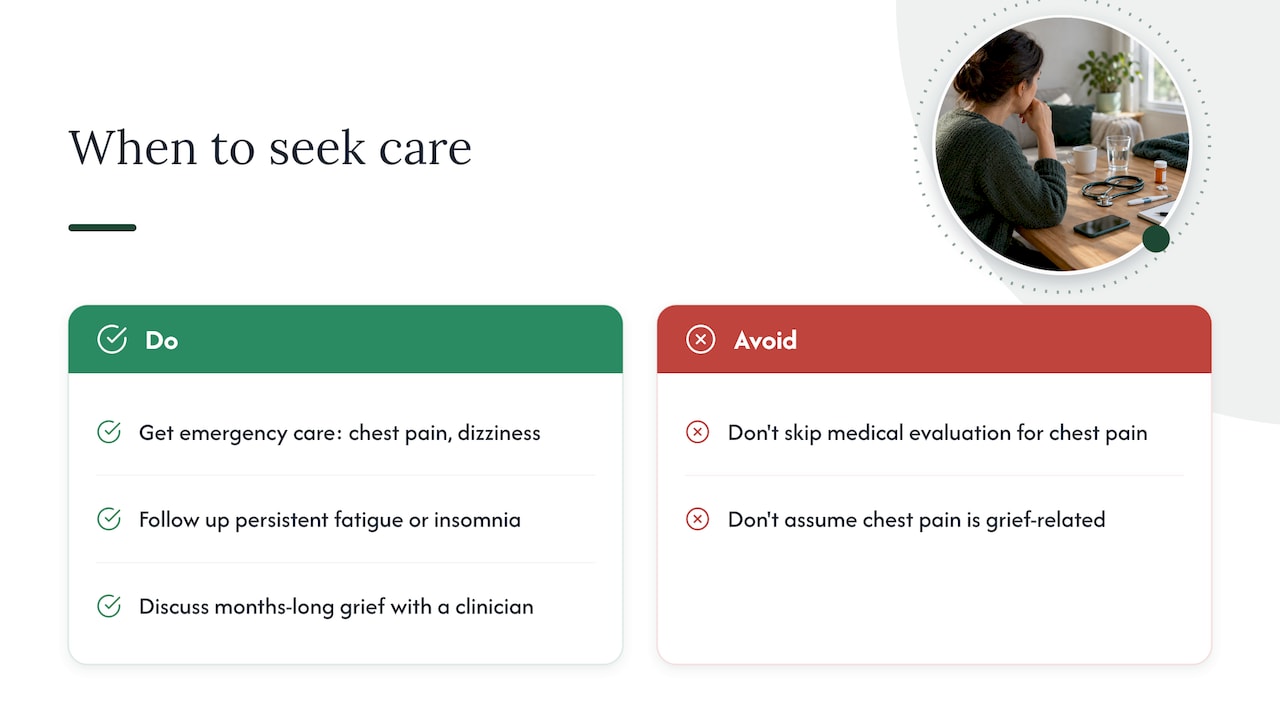
Chest pain during grief can resemble cardiac symptoms closely enough that medical evaluation should never be skipped, since ruling out a cardiac cause comes first, before attributing the pain to grief.
Seek emergency care for chest pain accompanied by shortness of breath, pain radiating to the arm or jaw, dizziness, or a racing heartbeat. Persistent fatigue, appetite loss, or insomnia that don’t improve after a few weeks are reasons to follow up with a primary care provider. If grief symptoms remain intense and disruptive for many months, a systematic review of prolonged grief disorder found strong associations between prolonged grief and somatic health problems like insomnia and blood pressure changes, which is worth raising with a clinician who can discuss evidence-based treatment.
Memorials, routines, and rebuilding life after an ESA
Honoring your ESA doesn’t require a big gesture, and there’s no timeline you need to rush. Small, repeatable acts of remembrance tend to feel more sustainable than one large ritual.
- Create a photo album or memory box you can return to when you want to, rather than avoid.
- Plant something in your ESA’s memory, or set a recurring time each month for quiet reflection.
- Rebuild structure with small swaps, like keeping your old walk time but using it for a solo walk or a call with a friend.
- Consider volunteering at a shelter if and when it feels supportive rather than painful.
- Think about another pet only when the idea brings curiosity rather than guilt or pressure, since readiness looks different for everyone.
How ESAs fit into clinical care and what comes next
Clinicians generally treat an emotional support animal as one part of a broader mental health plan, not a standalone treatment. Most licensed professionals require a diagnosed condition, such as an anxiety disorder or prolonged grief disorder, before documenting a clinical need for an ESA, and that framework matters if you’re considering a new ESA while still grieving.
- Bring up grief symptoms directly with your clinician and ask whether an ESA fits your current treatment plan.
- Ask what documentation should include: a licensed clinician’s evaluation and a clear statement connecting your condition to your need for the animal.
- Watch for red flags common in ESA scams, like instant certificates, registries, or ID cards sold without any clinical evaluation.
- Review what valid ESA documentation looks like before engaging any service that asks for payment upfront.
Pro Tip: Keep a copy of any ESA letter and your clinician’s contact information in one place, since having documentation ready protects your housing rights under the Fair Housing Act if you need to act quickly.
A note on grieving an emotional support animal
Losing an ESA carries a layered kind of grief: you lose a companion and, often, a source of daily emotional regulation at the same time. That combination can hit harder than people expect, and there’s no reason to minimize it.
Use the coping steps above, lean on the people around you, and take any physical symptoms seriously enough to get them checked. If grief feels unmanageable for months rather than weeks, professional support exists specifically for this.
— Erik
Guides on ESA rights, documentation, and avoiding scams
When grief eventually turns toward practical questions, like whether to pursue a new ESA or how to document one you already have, we built our guide to ESA rights and housing protections to walk through it in plain language.
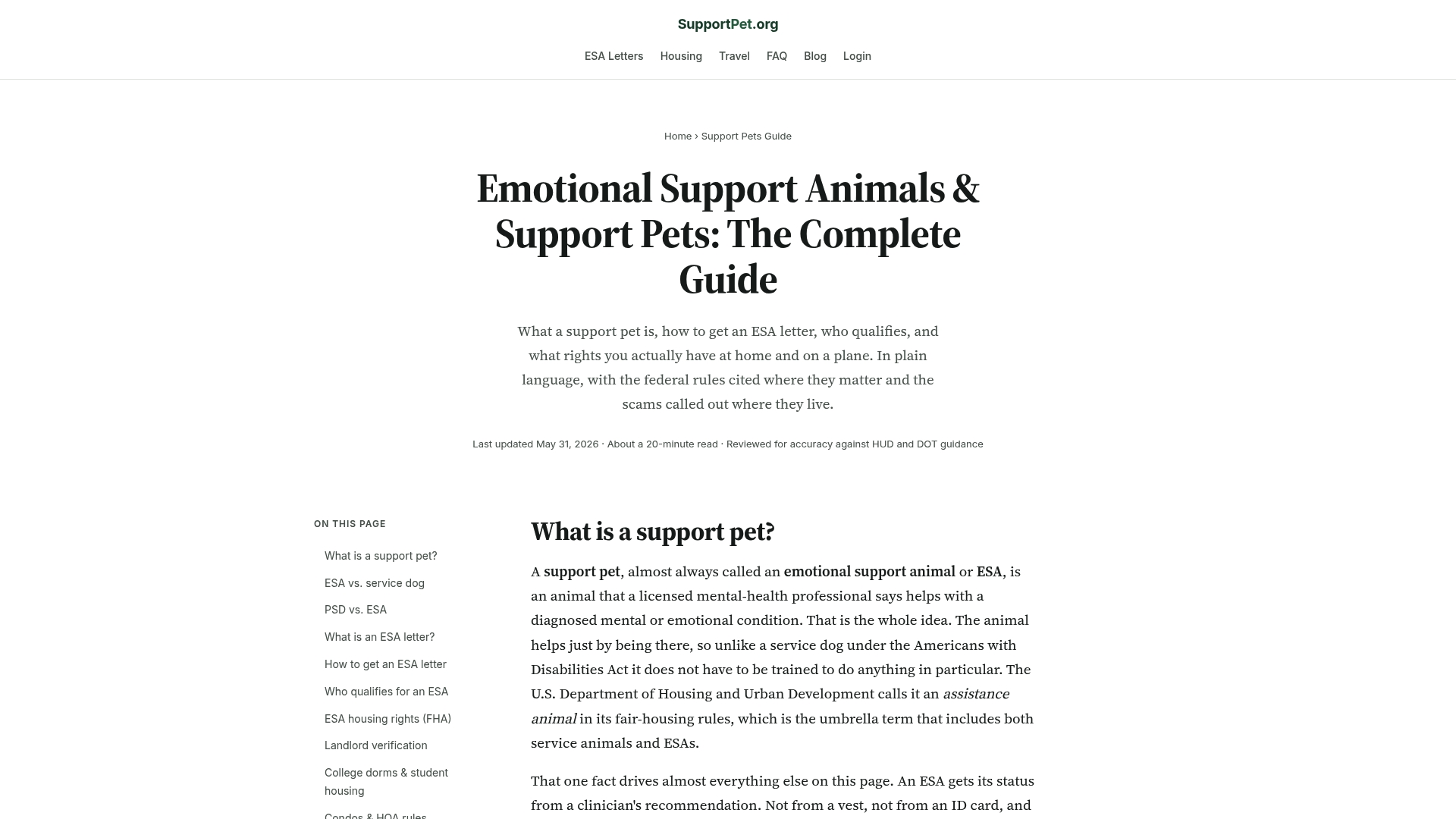 Our resources cover ESA letter requirements, Fair Housing Act accommodations, and how to notify a landlord about an ESA, all written to help you understand the risks of fake certificate sites that circulate online.
| Resource | What it covers |
|---|---|
| ESA Rights Guide | Housing protections and general ESA eligibility |
| ESA Letter Guide | What a legitimate clinician letter includes |
| Landlord Notification Template | Copy-ready language for notifying a landlord |
Pro Tip: Save your ESA documentation and our notify-your-landlord guide in one folder, so housing questions don’t add stress while you’re still grieving.
If you’re ready to look into documentation for a current or future ESA, start with our ESA rights and letter guide.
This article is general information, not a substitute for advice from a qualified doctor. Consult a qualified healthcare professional about your own circumstances before acting on anything here.
FAQ
How can I cope with grief?
Small daily anchors, like consistent sleep, meals, and short walks, combined with naming your needs to people you trust, tend to help the most in acute grief. The National Institute on Aging also recommends seeking professional support if grief feels unmanageable after several weeks.
Where can I find more grief support resources?
Public resources like the National Institute on Aging offer practical, free guidance on coping with loss, and our site focuses specifically on ESA documentation and housing rights for people whose grief involves losing or seeking an emotional support animal. Local grief counselors, teletherapy platforms, and peer support groups are also widely available.
What are the psychological effects of losing a loved one?
Grief after a significant loss commonly includes sadness, difficulty concentrating, sleep disruption, and in some cases symptoms that persist long enough to meet criteria for prolonged grief disorder. A systematic review found that prolonged grief is associated with somatic problems including insomnia and blood pressure changes, which is why ongoing symptoms deserve a clinician’s attention.
What are some common physical symptoms of grief exhaustion?
Fatigue, appetite changes, disrupted sleep, and chest pain are among the most common physical symptoms linked to grief. Researchers describe possible stress and inflammation pathways connecting bereavement to these symptoms, though chest pain always warrants medical evaluation to rule out cardiac causes.
Sources
- Coping with grief and loss — National Institute on Aging (NIH)
- Evidence on Complicated Grief Treatment and prolonged grief disorder — PMC